

|
|
YUGOSLAVIA |
 (B) Titograd is now called Podgorica

1929 - 1961
Agricultural Vehicle
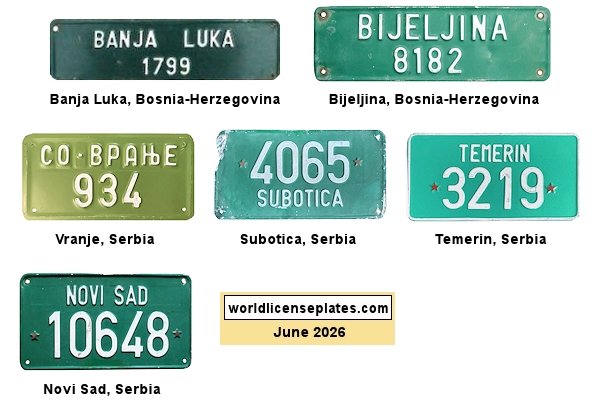
Bicycle
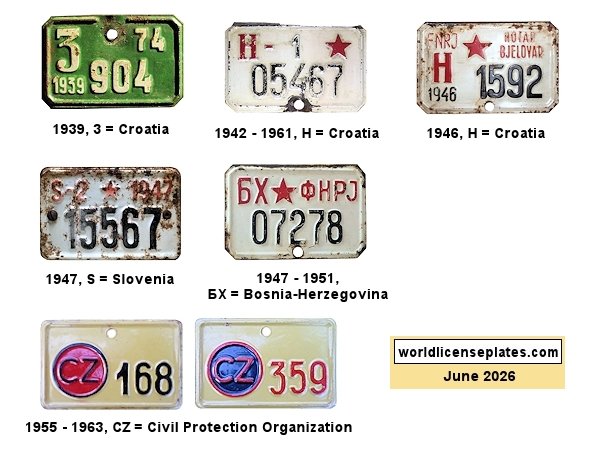
Diplomatic Corps, Foreign Mission

Heavy Machinery
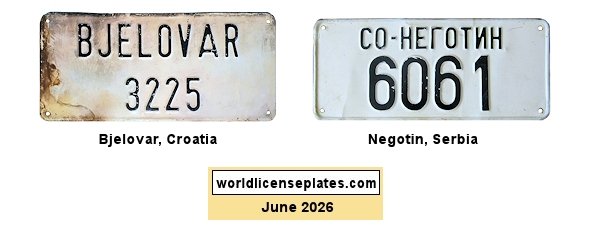
Military

Motorcycle, Moped

Police

Steam Tractor, Horse Drawn Carriage

Taxi (Additional)
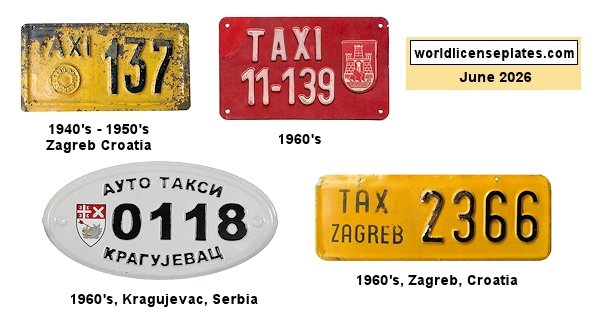
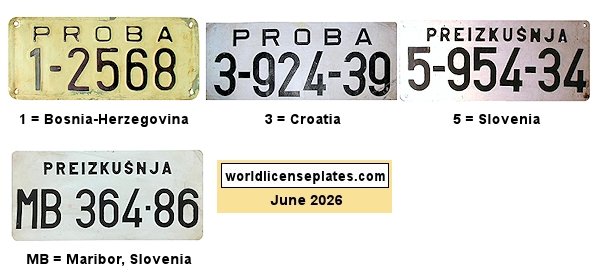
Temporary

Trade, Manufacturer
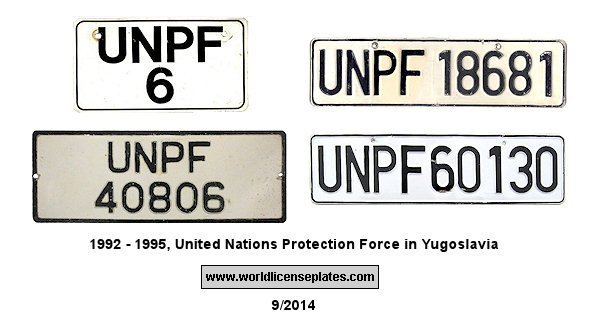
United Nations
Click here to go to the United Nations page.
Odds & Ends

Bosnia-Herzegovina (1992)
Croatia (1991)
Kosovo (2008)
Montenegro (2006)
North Macedonia (1991)
Serbia (1991)
Slovenia (1991)

History Yugoslavia was formed in 1919 by the unification of Serbia, Montenegro and the South-Slavic parts of Austria-Hungary. Between 1941 and 1943, most of today's Montenegro was occupied by Italy.
Between 1941-45, Croatia was an independent protectorate.
Slovenia was partitioned between Germany, Italy and Hungary.
Kosovo was incorporated into Albania.
Macedonia was incorporated into Bulgaria.In the early 1990's, Croatia (1991), Slovenia (1991), Macedonia (1991, now called North Macedonia) and Bosnia-Herzegovina (1992) seceded from Yugoslavia and began issuing their own distinct license plates.
Yugoslavia changed it's official name to Serbia and Montenegro. Montenegro voted for independence from Serbia in May 2006.
Kosovo declared independence from Serbia in February 2008. Kosovo's independence is not recognized by Serbia and some other countries.International Oval YU ISO Code YU
(1) Jim Fox/Greg Gibson
